
"Grain shape"
700 article(s) found

How to tell Tibica from Katim?
Following Cafe Review (official Wechat account vdailycom) found that Beautiful Cafe opened a small shop of Yunnan small Coffee, Rubiaceae, Coffee Genus, mainly distributed in Lincang, Baoshan, Simao, Xishuangbanna, Dehong and other prefectures. Small grains of coffee are native to Ethiopia or Arabian Peninsula. The main producing area of small grain coffee is suitable to grow at an altitude of 800 to 1800 meters above sea level.

How does Tibica Coffee distinguish its appearance? how does Katim Coffee distinguish?
Yunnan small-grain coffee Yunnan small-grain coffee, Rubiaceae, coffee genus, the planting area is mainly distributed in Lincang, Baoshan, Simao, Xishuangbanna, Dehong and other states. Small grains of coffee are native to Ethiopia or Arabian Peninsula. The main producing area of small-grain coffee is suitable to grow in the mountains of 800-1800 meters above sea level. If the altitude is too high, it will taste sour, and if it is too low, it will taste bitter. Most small grains of coffee are planted at 1100 above sea level.

Introduction to the characteristics of fine coffee beans in the manor area of small-grain iron pickup coffee made in Yunnan, China
Panama is located in the isthmus of Panama in Central America, bordered by Colombia to the east, the Pacific Ocean to the south, the map of Panama to Costa Rica to the west and the Caribbean Sea to the north. The territory is S-shaped to connect North and South America, and the Panama Canal connects the Atlantic and Pacific oceans from north to south. It is known as the bridge of the world. [5] Panama has a land area of 75517 square kilometers.

Information introduction of Katim, the main variety of domestic coffee. Is Katim small-grain coffee?
Professional coffee knowledge exchange more coffee bean information please follow the coffee workshop (Wechat official account cafe_style) Yunnan domestic coffee bean varieties are mainly grown in Katim, but the most famous is Yunnan small-grain coffee, so, Katim is small-grain coffee? Katim is not a small seed coffee. Katim is a small grain coffee variety Kaddura and a small grain hybrid Timo.

Introduction of Yunnan Coffee varieties description of the characteristics of Yunnan small Grain Coffee Iron Card
Professional coffee knowledge exchange more coffee bean information please follow the coffee workshop (Wechat official account cafe_style) front street-Yunnan coffee varieties, coffee three major varieties knowledge sharing Arabica, also known as small coffee beans, originated in Ethiopia. Arabica coffee trees grow mostly at an altitude of 10002000 meters, are hardy, and the suitable growth temperature is 1524 ℃.
There are chocolate color, grain type, complete Yemeni coffee flavor, characteristics, taste and manor
Yemeni coffee originated from Arabian coffee trees hundreds of years ago, all produced in areas above 3000 feet above sea level. For hundreds of years, the unique planting and production methods of Yemeni coffee have remained almost unchanged. The seedlings of Yemeni coffee trees are first cultivated in nurseries and then transplanted to high elevations. Pesticides and fertilizers are not used in the breeding process. Mature coffee beans are naturally dried on coffee trees and shelled by stone grinding.

Cultivation techniques of small-grain Coffee in Yunnan Province: disease Control
1. Coffee rust is the main disease of coffee, the most harmful, the damaged plants, light reduced yield, serious death. Coffee rust is mainly harmful to leaves and sometimes to young fruits and twigs. After the leaves were infected, many light yellow spots appeared at first and enlarged in the form of water stains, followed by orange-yellow powdery spores on the back of the leaves, and there was a light green halo around the disease spots, which gradually expanded or connected in the later stage.

Katim coffee bean, Katim coffee bean characteristics
Follow the caf é (official Wechat account vdailycom) found that the beautiful cafe opened its own small shop, small seed coffee, which belongs to the high generation variety of Katim, with medium dwarf plant, exuberant growth, stable by-characters, emerald green leaves of crown buds, dark green leaves of the whole plant, columnar shape, short internodes, many branches, exuberant growth, wide adaptability, strong drought resistance and certain cold resistance.

Introduction to fine coffee with cherry-like appearance, bright red and sweet pulp
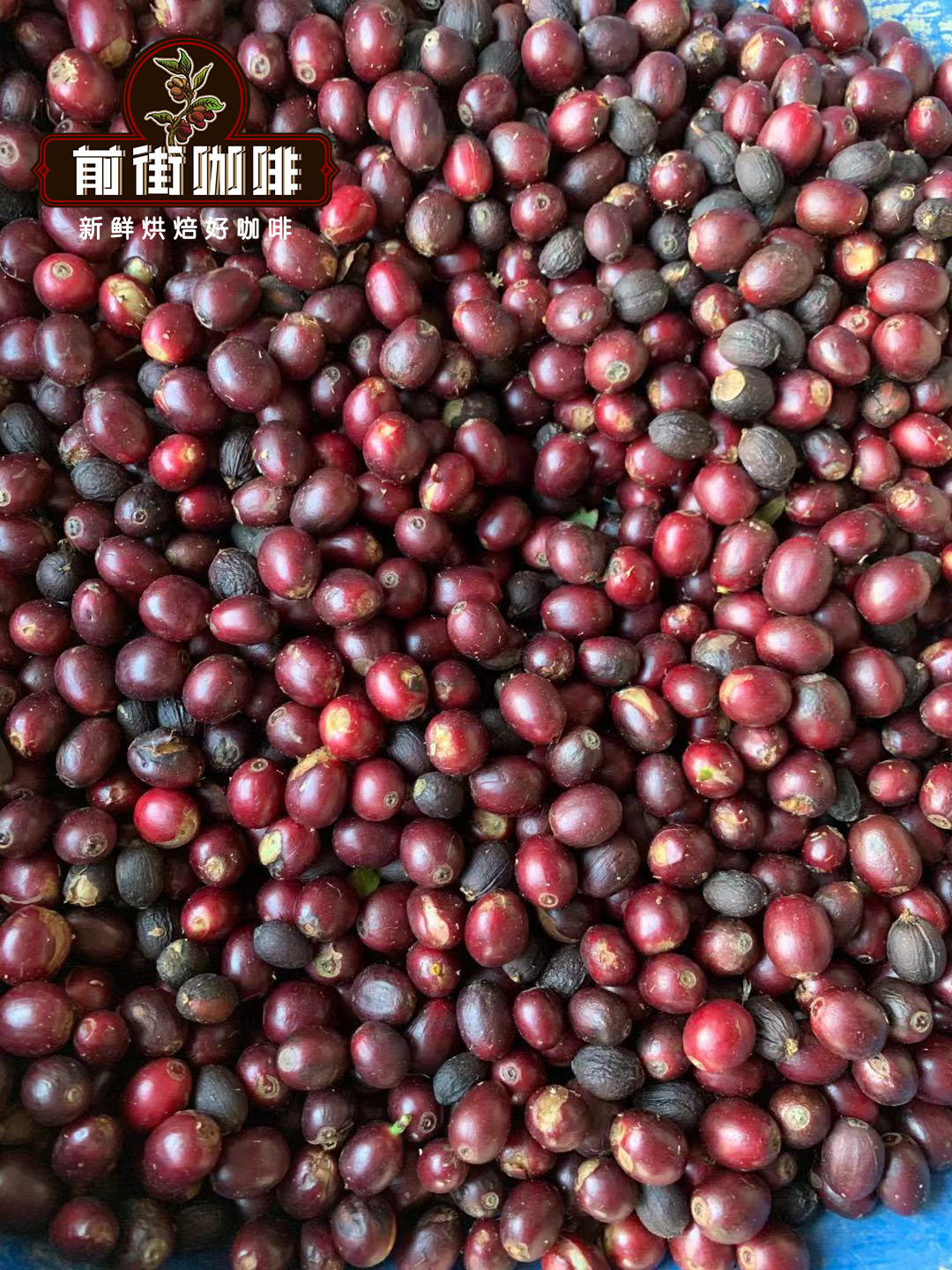
The ripe coffee berries look like cherries and are bright red with sweet flesh and contain a pair of seeds, namely coffee beans (Coffee Beans). Coffee varieties can be divided into small-grain, medium-grain and large-grain species, the former contains low caffeine content and strong flavor, while the latter two have high caffeine content but poor flavor. The coffee sold in the world is generally made up of small and medium seeds according to different ratios.
Species botany of coffee beans
Scientific taxonomy of coffee: Plantae phylum: embryonic phylum Spermatophyta (unclassified) true dicotyledons eudicots core true dicotyledons core eudicots class: angiosperms Angiosperma (ungraded) chrysanthemum asterids lip-shaped branches lamiids: Gentianales family: Rubiaceae Rubi

The various parts of the coffee plant decompose the shallow root crop of coffee.
Coffee is a shallow root crop, and the plants propagated with seeds have conical roots. Root system refers to the general name of root. The root morphological distribution and depth of shade varieties / soil conditions and agricultural technical measures are different. From the point of view of varieties, the roots of small / medium grain species are shallower, while those of large grain species are deeper. Under normal circumstances, there is a thick and short taproot and many well-developed lateral roots. Yunnan small-grain coffee has a 4-year-old fruit.

How many years does it take for a coffee tree in Yunnan from planting to fruiting? how much can a coffee tree produce in a year?
How many years does it take for a coffee tree from planting to fruiting-the first flowering period of a coffee tree is about three years old, with white five-petal tube-shaped flowers and a faint scent of jasmine. The inflorescences are dense and arranged in clusters. Flowers wither after two or three days of blooming and begin to bear fruit after a few months. The fruit is a drupe, about 1.5% in diameter.

Cultivation techniques of Coffee Tree Seedling Propagation and Establishment of Coffee Garden
(1) Seedling propagation Coffee seedling propagation can be divided into seed propagation and asexual reproduction. 1. Seed propagation (1) seed collection, seed washing and seed storage during the full ripening period of coffee (the full ripening period of medium-grain coffee in Hainan Island is from February to March, and that of small seed is from September to November). The fully ripe fruits are picked from strong and high-yielding mother trees to make seeds. After the fruit is harvested, peel and wash the seeds immediately. The method is to remove the fruit.

General knowledge of Fine Coffee cultivation of small Coffee in Yunnan
The origin of Yunnan small-grain coffee: in 1892, the French preacher Father Tian succeeded in experimenting with growing coffee in a place called Zhu Kula in Yunnan. To the city of Guzhu Kula, there are still 24 coffee trees with more than 90 years old. Zhu Kula is a mysterious, colorful and natural village, attached to the Zhukula Village Committee, Pingdi Town, Binchuan County, Dali Prefecture, located in the trunk of the Jinsha River.
Cultivation of small Coffee in Yunnan
Small-grain coffee is suitable for living in mountains with an altitude of 800 to 1800 meters. If the altitude is too high, it will taste sour, and if it is too low, it will taste bitter. Small grains of coffee are mostly planted in dry and hot valleys at an altitude of 1100 meters above sea level, so they are moderately sour, rich and mellow.

Boutique Coffee beans: introduction of Java long-grain beans in Limon Manor of Nicaragua
Nicaragua Lemon Tree Manor (JavaNica?Nicaragua Limoncillo Estate) Coffee production area: Nicaragua / Matagalpa Province / Limoncillo Manor planting area: 100ha planting altitude: 980mm 1350m Raw Bean Variety: JavaNica (Long Berry) Raw Bean treatment: Washed and Sun Dried harvest season: December-March Lemon Manor
Coffee taste, flavor and difference between Yunnan small-grain coffee iron pickup and katim
Following Kaiping (official Wechat account vdailycom) found that Yunnan coffee beans are generally of mediocre quality, because most Yunnan coffee beans are used as the raw material for instant coffee (good coffee beans are not used for instant coffee.) if it is recommended to buy coffee beans with a roasting date of no more than March, it would be better to have an organic sign on the package.

Katim coffee bean characteristics Manor producing area Flavor description Processing method Variety introduction
Characteristics of Katim coffee beans Manor production area Flavor description Method of treatment Variety introduction Bourbon: tied with Tibica as an ancient fine variety. Some botanists even believe that Boben is a variant of the early Tibica transplanted to Yemen, and the bean shape changes from thin and pointed to round. It wasn't until 1715, when France transplanted the Yemeni mocha round bean to Bourbon Island on the east coast of Africa, that it began to receive

Is Yunnan Baoshan coffee variety small grain coffee? How much is Nanbaoshan coffee per jin?
Professional coffee knowledge exchange more coffee bean information please follow the coffee workshop (Wechat official account cafe_style) Yunnan small-grain coffee, Rubiaceae, coffee genus, planting areas are mainly distributed in Lincang, Baoshan, Simao, Xishuangbanna, Dehong and other states. Baoshan small grain coffee is native to Ethiopia or Arabian Peninsula. The main producing area of small-grain coffee is suitable to grow at 800-1800 above sea level.
Cultivation and cultivation of High-quality Coffee
(1) Seedling propagation Coffee seedling propagation can be divided into seed propagation and asexual reproduction. 1. Seed propagation (1) seed collection, seed washing and seed storage during the full ripening period of coffee (the full ripening period of medium-grain coffee in Hainan Island is from February to March, and that of small seed is from September to November). The fully ripe fruits are picked from strong and high-yielding mother trees to make seeds. Immediately after the fruit is harvested, peel and wash the seeds. The method is to place the fruit.